Support Email : courses@iiems.in
 Kottayam, Ernakulam, Trivandrum, Tamil Nadu
Support Email : courses@iiems.in
Kottayam, Ernakulam, Trivandrum, Tamil Nadu
Kottayam, Ernakulam, Trivandrum, Tamil Nadu
Support Email : courses@iiems.in
Kottayam, Ernakulam, Trivandrum, Tamil Nadu
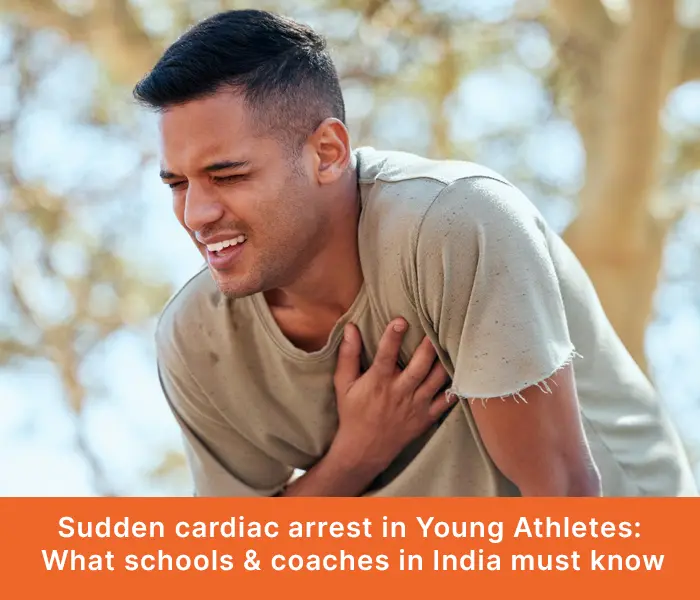
Every year, incidents of young athletes collapsing during football matches, cricket practice sessions, marathons, and school sports events shock communities across India. Most of these children and teenagers appear healthy and active, yet a silent medical emergency called Sudden Cardiac Arrest (SCA) can become fatal within minutes if immediate action is not taken.
For schools, sports academies, physical education teachers, and coaches, understanding Sudden Cardiac Arrest is now essential. Timely recognition, early CPR, and rapid emergency response can save lives.
The Indian Institute of Emergency Medical Services (IIEMS), one of India’s leading emergency medicine and life-support training institutions, emphasizes that awareness and preparedness are the strongest defenses against preventable sports-related fatalities.
What is Sudden Cardiac Arrest?
Sudden Cardiac Arrest occurs when the heart suddenly stops beating effectively due to an electrical malfunction. Unlike a heart attack, which is caused by blocked blood flow, SCA prevents the heart from pumping blood to the brain and vital organs.
When this happens, the athlete may:
- Collapse suddenly
- Become unresponsive
- Stop breathing normally
- Show seizure-like movements
- Lose consciousness within seconds
Without immediate CPR and defibrillation, survival chances decrease rapidly every minute.
Why Are Young Athletes at Risk?
Young athletes often undergo intense physical exertion, especially in hot and humid conditions. While exercise is generally healthy, certain undiagnosed heart conditions can trigger dangerous heart rhythms during sports activity.
Common causes include:
- Hypertrophic cardiomyopathy
- Congenital heart abnormalities
Arrhythmias
- Myocarditis
- Genetic heart disorders
- Electrical conduction defects
In India, many students participate in competitive sports without proper cardiac screening. Coaches may also mistake warning signs like dizziness, chest pain, or fainting as simple exhaustion or dehydration, increasing the risk significantly.
Growing Concern in India
India has witnessed increasing reports of cardiac emergencies among young adults and athletes in recent years. Healthcare experts and sports authorities are now stressing the importance of emergency preparedness in schools and sports institutions.
Unfortunately, many schools still lack:
- CPR-trained staff
- Emergency response plans
- AED devices
- Medical preparedness during sports events
- Emergency drills
In high-intensity sports situations, delays of even a few minutes can become critical.
Warning Signs Coaches Must Never Ignore
Although some athletes may show no symptoms before collapse, several warning signs can appear earlier.
Schools and coaches should take these symptoms seriously:
- Fainting during exercise
- Chest pain during sports
- Unexplained shortness of breath
- Heart palpitations
- Excessive fatigue
- Dizziness after exertion
- Family history of sudden cardiac death
Any athlete with these symptoms should undergo medical evaluation before continuing competitive sports.
The First Few Minutes Matter Most
The survival chain in Sudden Cardiac Arrest is simple but extremely time-sensitive.
1. Recognize the Emergency
If an athlete suddenly collapses and becomes unresponsive, assume cardiac arrest immediately.
2. Call Emergency Services
Activate emergency medical support without delay.
3. Begin CPR
Immediate chest compressions help maintain blood circulation to the brain and vital organs until professional help arrives.
4. Use an AED
An Automated External Defibrillator (AED) can analyze heart rhythm and deliver a life-saving shock when required.
5. Continue Care
Continue CPR and emergency support until medical professionals take over.
Medical experts state that early CPR can double or triple survival rates during cardiac arrest emergencies.
Why Every School Needs CPR Training
Most school staff are not healthcare professionals, but they are often the first responders during emergencies. This is why CPR and Basic Life Support (BLS) training should become mandatory for:
- Sports coaches
- Physical education teachers
- School nurses
- Gym trainers
- Hostel wardens
- Event coordinators
- School transport staff
IIEMS has been actively promoting emergency medical education and internationally recognized life-support training programs including BLS, ACLS, trauma care, and first responder training across India.
The institution has trained more than 4 lakh healthcare professionals and first responders through thousands of training programs nationwide.
Importance of AEDs in Schools & Sports Grounds
An Automated External Defibrillator (AED) is a portable device designed to restore normal heart rhythm during cardiac arrest.
Modern AEDs are:
- User-friendly
- Voice-guided
- Safe for public use
- Designed for non-medical responders <
Globally, AEDs are commonly available in stadiums, airports, malls, schools, and fitness centers. In India, however, their availability in educational institutions is still limited.
Having an AED on campus can significantly improve survival chances during Sudden Cardiac Arrest.
Building an Emergency Response System
Preparedness is not just about equipment- it also requires planning and training.
Schools should establish:
- A written Emergency Action Plan (EAP)
- CPR-trained response teams
- Accessible first-aid kits and AEDs
- Student and parent awareness programs
- Regular emergency drills
- Pre-participation medical screening for athletes
These measures can help schools respond quickly and effectively during medical emergencies.
The Role of Coaches Beyond Performance
Today’s coaches are more than trainers- they are guardians of athlete safety.
A responsible coach should:
- Monitor athletes for warning signs
- Encourage hydration and adequate rest
- Avoid overtraining
- Promote medical screening
- Understand emergency response basics
- Stay calm during emergencies
Creating a safe environment where students feel comfortable reporting health concerns is equally important.
Why Emergency Education Matters
India’s sports culture is rapidly expanding through school tournaments, academies, fitness programs, and competitive leagues. However, emergency preparedness has not grown at the same pace.
Institutions like IIEMS continue to bridge this gap through emergency medicine education, trauma care training, disaster management programs, and internationally aligned life-support certifications. Their mission, “Save Lives Through Training,” reflects the urgent need for emergency awareness among healthcare and non-healthcare communities alike.
Conclusion
Sudden Cardiac Arrest in young athletes is rare, but when it happens, the consequences can be devastating. The good news is that many deaths are preventable through awareness, preparation, and quick action.
Schools and sports academies in India must move beyond focusing only on athletic performance. Emergency readiness should become an essential part of every sports program.
When coaches are trained, CPR is initiated quickly, and AEDs are available, lives can be saved.
Preparedness is no longer a luxury for educational institutions -it is a responsibility. Institutions like IIEMS play a vital role in building this culture of safety through professional emergency medical education, CPR training, Basic Life Support (BLS), and life-saving awareness programs that empower communities to respond confidently during emergencies.