Support Email : courses@iiems.in
  Kottayam, Ernakulam, Trivandrum, Tamil Nadu Support Email : courses@iiems.in Kottayam, Ernakulam, Trivandrum, Tamil Nadu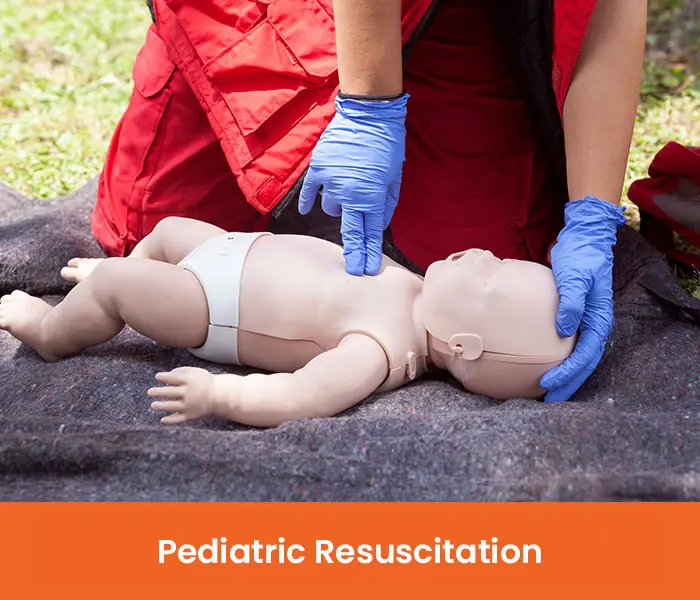
In the crucial moments of a child’s medical emergency- whether due to cardiac arrest, respiratory failure, or trauma- every second counts. Pediatric patients require quick, accurate, and specialized care that differs significantly from adult cases. This is where Pediatric Advanced Life Support (PALS) becomes vital.
At IIEMS, we deliver world-class emergency medical education. Through our internationally recognized PALS certification programs, we equip healthcare professionals with the knowledge and skills needed to respond effectively to pediatric emergencies and save young lives.
Why Pediatric Resuscitation Is Different
Children are not simply smaller versions of adults. Their anatomical and physiological characteristics make emergency care uniquely challenging. For example:
- Smaller airways are more prone to obstruction
- Children compensate well-until they don’t, often deteriorating suddenly
- Pediatric cardiac arrests usually follow respiratory failure or shock
Recognizing signs early and intervening immediately is essential. Common scenarios that may require resuscitation include:
- Respiratory failure
- Cardiac arrhythmias or congenital heart issues
- Drowning or near-drowning
- Trauma or injury
- Sepsis or shock
- Sudden infant death syndrome (SIDS)
In all these cases, timely intervention using PALS protocols can make the difference between life and death.
What is PALS?
Pediatric Advanced Life Support (PALS) is a comprehensive training program developed by the American Heart Association (AHA) for healthcare providers responding to pediatric emergencies. The training combines theory, clinical judgment, and hands-on practice within an evidence-based framework.
Key focus areas include:
- Pediatric assessment techniques
- High-quality CPR and airway management
- Recognition and management of respiratory failure and shock
- Defibrillation and cardioversion
- Drug administration and dosing
- Post-resuscitation care
- Effective team communication
The goal of PALS is not just to treat emergencies-it’s to improve outcomes and prevent further deterioration in critically ill or injured children.
When Is Pediatric Resuscitation Required?
Children can deteriorate rapidly, making it essential to act at the first signs of clinical decline.
Here’s when resuscitation may be necessary:
1. Respiratory Distress or Arrest
- Fast or labored breathing
- Cyanosis or poor oxygenation
- Apnea or shallow breathing
2. Signs of Shock
- Weak pulses, cold extremities
- Delayed capillary refill
- Confusion, irritability, or lethargy
3. Cardiac Arrest
- No breathing or pulse
- Unresponsive to stimuli
- Requires immediate CPR
4. Severe Arrhythmias
- Bradycardia or tachycardia with poor perfusion
- Pulseless electrical activity (PEA)
- Ventricular fibrillation or pulseless ventricular tachycardia
Each of these situations demands a fast, skilled response- a core outcome of PALS training.
The PALS Approach: Step by Step
PALS training at IIEMS teaches a structured, lifesaving approach to pediatric emergencies:
Step 1: Initial Assessment - Pediatric Assessment Triangle
- Appearance (tone, interaction)
- Work of Breathing (grunting, retractions)
- Circulation to Skin (pallor, cyanosis)
This quick visual tool helps assess severity without equipment.
Step 2: Primary & Secondary Survey (ABCDE)
- Check Airway, Breathing, Circulation, Disability (neuro status), Exposure
- Identify and manage life-threatening conditions
- Collect focused history using SAMPLE method
Step 3: High-Quality CPR
- 100–120 compressions/min
- Depth: 1.5" (infants), 2" (children)
- Minimal interruption, proper recoil, coordinated ventilation
Step 4: Advanced Interventions
- Bag-mask ventilation or advanced airway
- IV/IO access and medication administration (e.g., epinephrine, amiodarone)
- Use of defibrillator or synchronized cardioversion
- Continuous ECG, SpO₂, and ETCO₂ monitoring
Step 5: Team Dynamics
- Clear role assignment
- Closed-loop communication
- Ongoing reassessment
Step 6: Post-Resuscitation Care
- Stabilize vitals
- Ensure oxygenation and perfusion
- Treat root causes
- Monitor for complications like organ dysfunction
Each of these steps builds confidence and competence in real-time emergencies.
Why Train with IIEMS?
IIEMS offers internationally accredited PALS certification and recertification programs, designed to match the pace and complexity of real-world pediatric care.
Here’s what makes our PALS training unique:
- Interactive Learning – Real-life scenarios, team-based drills, and simulations
- Expert Faculty – Experienced emergency care professionals
- Global Recognition – AHA-aligned certifications respected worldwide
- Comprehensive Curriculum – Latest protocols, pharmacology, and post-care guidelines
- Flexible Formats – On-site, blended, and institutional training options
Whether you’re a physician, nurse, paramedic, or student, PALS training at IIEMS prepares you to lead when a child’s life depends on it.
Conclusion: Every Second Counts
Pediatric emergencies are emotionally charged and technically demanding. But with the right training through PALS, healthcare providers can respond swiftly and effectively, improving survival and recovery rates for children.
PALS is more than a course- it’s a commitment to saving young lives. At IIEMS, we empower medical professionals with the skills, confidence, and clarity they need to act when it matters most.