Support Email : courses@iiems.in
  Kottayam, Ernakulam, Trivandrum, Tamil Nadu Support Email : courses@iiems.in Kottayam, Ernakulam, Trivandrum, Tamil Nadu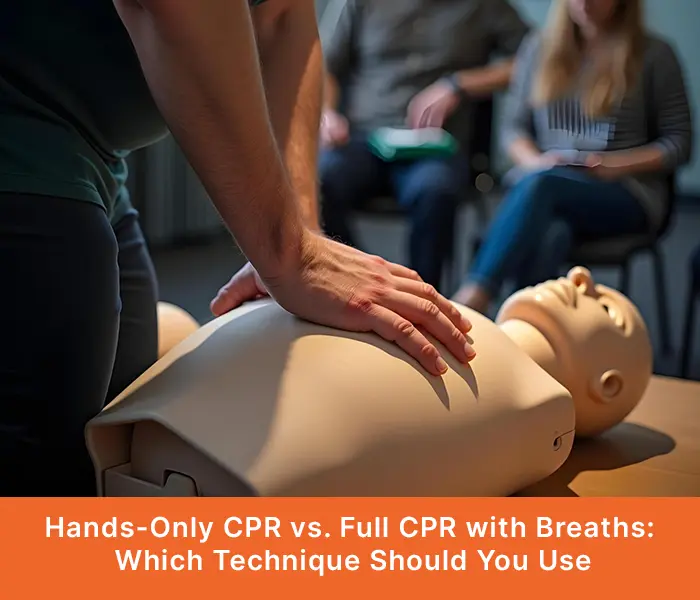
Every second counts during a cardiac emergency. When a person suddenly collapses and stops breathing normally, immediate action can mean the difference between life and death. Cardiopulmonary Resuscitation (CPR) is one of the most important life-saving skills that anyone can learn. However, many people are unsure whether they should perform Hands-Only CPR or Full CPR with rescue breaths.
Understanding the difference between these techniques can help you respond confidently during an emergency. At IIEMS (Indian Institute of Emergency Medical Services), emergency care education focuses on equipping healthcare professionals and community members with internationally recognized life-support skills, including CPR, BLS, ACLS, and First Aid training. As one of India's leading emergency medical training institutions, IIEMS has trained hundreds of thousands of healthcare providers and first responders in life-saving interventions.
Understanding CPR
CPR is an emergency procedure performed when a person's heart stops beating effectively or when they stop breathing. The goal is to maintain blood flow and oxygen delivery to vital organs, especially the brain, until advanced medical care arrives.
When performed correctly, CPR can significantly increase a person's chances of survival. Studies and emergency medicine organizations worldwide emphasize that immediate bystander CPR can double or even triple survival rates following sudden cardiac arrest.
There are two primary forms of CPR:
1. Hands-Only CPR
2. Full CPR (Chest Compressions with Rescue Breaths)
Both techniques are essential, but each has specific situations where it is most appropriate.
What Is Hands-Only CPR?
Hands-Only CPR involves performing continuous chest compressions without providing rescue breaths.
The rescuer:
- Calls emergency medical services.
- Places both hands in the center of the chest.
- Pushes hard and fast at a rate of approximately 100–120 compressions per minute.
- Continues compressions until professional help arrives or the person begins to respond.
This technique was developed to encourage more bystanders to take action during emergencies without worrying about mouth-to-mouth ventilation.
Advantages of Hands-Only CPR
1. Easy to Learn
Hands-Only CPR requires fewer steps, making it easier for the general public to remember and perform during stressful situations.
2. Faster Response
Many bystanders hesitate when rescue breaths are involved. Hands-Only CPR allows immediate action without delays.
3. Reduced Fear of Infection
Some people are uncomfortable performing mouth-to-mouth resuscitation on strangers. Hands-Only CPR removes this barrier.
4. Effective for Most Adult Cardiac Arrests
In many adult sudden cardiac arrest cases, there is still enough oxygen in the blood during the first few minutes. Continuous chest compressions help circulate that oxygen to vital organs.
What Is Full CPR with Rescue Breaths?
Full CPR combines chest compressions with rescue breaths.
The standard sequence generally includes:
- 30 chest compressions
- 2 rescue breaths
- Repeating the cycle until help arrives
The rescue breaths deliver oxygen into the lungs while chest compressions circulate oxygenated blood throughout the body.
Advantages of Full CPR
1. Provides Oxygen Replacement
Unlike Hands-Only CPR, Full CPR actively replenishes oxygen levels.
2. Essential in Respiratory Emergencies
Many emergencies begin with breathing failure rather than heart failure. In these cases, rescue breaths become critically important.
3. Better for Certain Patient Groups
Children, drowning victims, and individuals with respiratory arrest often benefit significantly from rescue breathing.
| Feature | Hands-Only CPR | Full CPR |
|---|---|---|
| Chest Compressions | Yes | Yes |
| Rescue Breaths | No | Yes |
| Complexity | Simple | More Advanced |
| Public Use | Recommended for most untrained bystanders | Recommended for trained rescuers |
| Adult Sudden Cardiac Arrest | Highly effective | Effective |
| Drowning Victims | Less effective | Preferred |
| Children and Infants | Less effective | Preferred |
| Respiratory Emergencies | Limited effectiveness | Highly effective |
When Should You Use Hands-Only CPR?
Hands-Only CPR is generally recommended when:
The Victim Is an Adult
Most adult cardiac arrests occur because of a sudden heart rhythm problem. In these situations, maintaining blood circulation through compressions is the immediate priority.
You Are Not CPR Trained
If you have never attended a CPR course, Hands-Only CPR is still far better than doing nothing.
You Are Uncomfortable Giving Rescue Breaths
Fear of disease transmission or uncertainty about technique should never prevent lifesaving action. Continuous chest compressions can still make a major difference.
Emergency Dispatchers Instruct You
Many emergency dispatch centers guide callers through Hands-Only CPR over the phone while emergency responders are on their way.
When Should You Use Full CPR with Rescue Breaths?
Full CPR is preferred in situations where oxygen deprivation is the primary problem.
Drowning Incidents
A drowning victim typically experiences oxygen deprivation before cardiac arrest occurs. Rescue breaths help restore oxygen levels.
Children and Infants
Cardiac arrest in children is often caused by breathing problems rather than heart conditions. Rescue breaths are particularly important.
Drug Overdose Cases
Many overdoses lead to respiratory failure before the heart stops.
Choking Emergencies
After an airway obstruction is removed, rescue breaths may be necessary to restore breathing.
Respiratory Arrest
Any situation involving severe breathing failure may require full CPR.
Common CPR Myths
Myth 1: CPR Can Restart the Heart
CPR itself does not usually restart the heart. Its primary purpose is to keep blood flowing until advanced care or defibrillation is available.
Myth 2: Only Healthcare Professionals Can Perform CPR
Anyone can learn CPR. Community training programs are specifically designed to prepare ordinary citizens for emergency situations.
Myth 3: You Might Hurt Someone
Broken ribs can occur during CPR, but this risk is far less serious than failing to act during cardiac arrest.
Myth 4: Hands-Only CPR Isn't Effective
Research and emergency medicine guidelines support Hands-Only CPR for most adult sudden cardiac arrest situations when performed promptly.
The Importance of CPR Training
Although Hands-Only CPR can be performed by almost anyone, formal CPR training provides a deeper understanding of emergency response.
Training helps individuals:
- Recognize cardiac arrest quickly.
- Perform high-quality chest compressions.
- Deliver effective rescue breaths.
- Use Automated External Defibrillators (AEDs).
- Manage choking emergencies.
- Respond confidently under pressure.
Organizations worldwide continue to promote CPR education because trained bystanders dramatically improve survival outcomes. Community discussions and emergency preparedness initiatives frequently emphasize the need for more citizens to receive CPR and first-aid training.
How IIEMS Helps Build Lifesaving Skills
IIEMS (Indian Institute of Emergency Medical Services) is recognized as one of India's leading emergency medicine and life-support training institutions. The organization conducts internationally accredited programs, including:
- Basic Life Support (BLS)
- Advanced Cardiovascular Life Support (ACLS)
- Pediatric Advanced Life Support (PALS)
- Heartsaver First Aid CPR AED
- Trauma and Emergency Care Courses
- First Aid and Community Safety Training
IIEMS has conducted thousands of training programs and empowered a vast number of healthcare professionals, emergency responders, and community members with practical lifesaving skills. Their programs emphasize hands-on simulation, evidence-based practices, and real-world emergency response preparedness.
Conclusion
Both Hands-Only CPR and Full CPR with rescue breaths save lives, but choosing the right technique depends on the situation.
For most adult sudden cardiac arrests, Hands-Only CPR is the recommended approach for untrained bystanders because it is simple, effective, and easy to perform. However, Full CPR with rescue breaths remains the preferred method for children, drowning victims, choking incidents, and respiratory emergencies.
The most important message is simple: doing something is always better than doing nothing. Immediate CPR can sustain life until professional medical help arrives.
Learning CPR through certified training programs can provide the confidence and skills needed to act decisively when every second matters. Whether you are a healthcare professional, teacher, student, parent, or community member, CPR training is an investment that could one day help save a life. For comprehensive emergency care and life-support training, IIEMS continues to play a vital role in building a safer and better-prepared society.