Support Email : courses@iiems.in
  Kottayam, Ernakulam, Trivandrum, Tamil Nadu Support Email : courses@iiems.in Kottayam, Ernakulam, Trivandrum, Tamil Nadu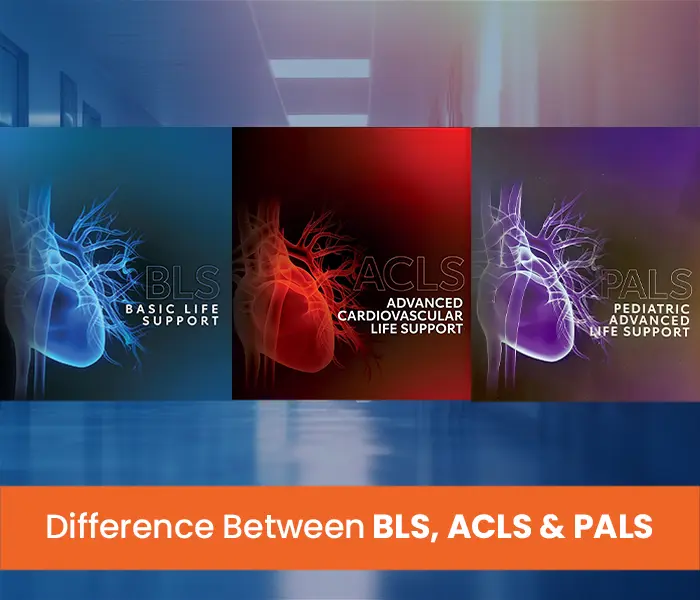
In the healthcare field, being prepared to handle emergencies isn’t just important—it’s essential. Whether you’re a medical student, nurse, paramedic, or physician, choosing the right emergency certification course can make a world of difference in your career and in the lives you save. Three of the most important certifications are BLS (Basic Life Support), ACLS (Advanced Cardiovascular Life Support), and PALS (Pediatric Advanced Life Support). But what’s the difference? And which one should you take?
What is BLS (Basic Life Support)?
BLS is the foundational course for all healthcare providers. It teaches lifesaving techniques like CPR, the use of an AED (Automated External Defibrillator), and how to respond to choking in adults, children, and infants.
Who Should Take BLS?
- Nurses
- EMTs & Paramedics
- Medical & Dental professionals
- Healthcare students
- Lifeguards and First Responders
Key Skills You Learn:
- Pediatric assessment and life support
- Respiratory and cardiac emergency management in children
- Pediatric advanced airway techniques
- Communication with pediatric teams and caregivers
Why BLS?
It’s the starting point for any healthcare professional. Without this training, more advanced courses like ACLS or PALS won’t be accessible.
What is ACLS (Advanced Cardiovascular Life Support)?
ACLS builds on BLS by focusing on managing adult cardiac emergencies such as stroke, heart attack, and respiratory failure. It’s designed for professionals working in high-stress, time-sensitive environments like emergency rooms and ICUs.
Who Should Take ACLS?
- ER and ICU Nurses
- Critical Care Physicians
- Anesthesiologists
- Paramedics
- Emergency Medicine Staff
Key Skills You Learn:
- Managing cardiac arrest and arrhythmias
- Advanced airway management
- Use of IV medications
- ECG interpretation
- Team leadership in code situations
Why ACLS?
If you work with adult patients in a critical care setting, ACLS training ensures you can lead or assist in life-saving interventions confidently.
What is PALS (Pediatric Advanced Life Support)?
PALS focuses on emergency care for infants and children. It teaches how to recognize and treat pediatric distress and cardiac emergencies, which often differ significantly from adult protocols.
Who Should Take PALS?
- Pediatric Nurses
- Pediatricians
- Paramedics dealing with children
- Emergency Room Staff
- School Health Professionals
Key Skills You Learn:
- Pediatric assessment and life support
- Respiratory and cardiac emergency management in children
- Pediatric advanced airway techniques
- Communication with pediatric teams and caregivers
Why PALS?
Children are not just small adults. Their physiological needs require specialized care. PALS certification ensures you're equipped to respond to emergencies in young patients.
Which Course Is Right for You?
Here’s a quick guide:
Profession | Ideal Course |
Medical/Nursing Student | BLS |
ICU/ER Nurse or Doctor | BLS + ACLS |
Pediatrician/Pediatric Nurse | BLS + PALS |
Paramedic/First Responder | BLS + ACLS + (PALS optional) |
School Nurse/Childcare Medic | BLS + PALS |
Start with BLS—it’s required for almost every healthcare role. Once you know your specialty, add ACLS or PALS based on your field.
Conclusion :
Choosing the right course isn’t just about meeting job requirements—it’s about being prepared to save lives. With the proper training in BLS, ACLS, or PALS, you’ll feel confident and capable during any emergency.Whether you’re starting your healthcare journey or advancing in your career, investing in the right emergency response training is a smart and responsible choice.
Want to get certified?
Look for accredited institutions in your area or online offering American Heart Association (AHA) certified training. If you're searching for the best place to start or advance your emergency medical skills, IIEMS is your ideal choice.
We offer internationally recognized courses in BLS, ACLS, and PALS, guided by experienced instructors and backed by real-world expertise.