Support Email : courses@iiems.in
  Kottayam, Ernakulam, Trivandrum, Tamil Nadu Support Email : courses@iiems.in Kottayam, Ernakulam, Trivandrum, Tamil Nadu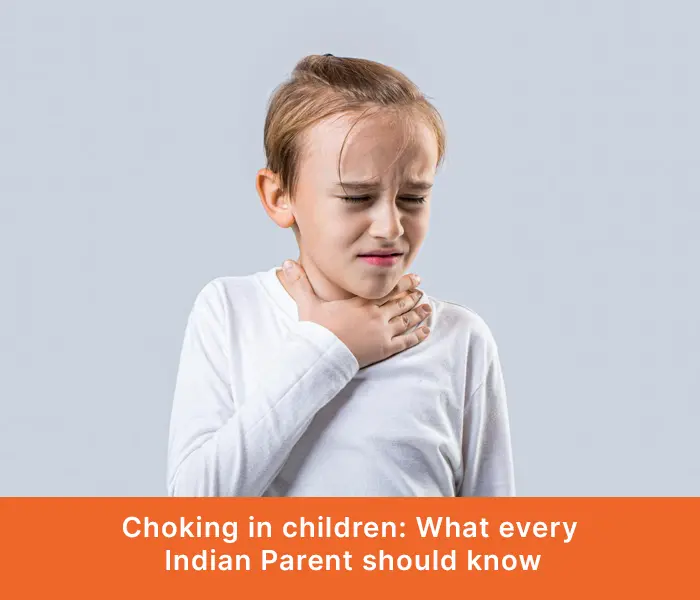
Children are naturally curious. They explore the world by touching, tasting, and putting things into their mouths. While this is a normal part of growth and development, it also makes choking one of the most common and dangerous emergencies among infants and young children. In India, where children often eat while playing, running, or traveling, the risk becomes even higher. Knowing how to identify and respond to choking can save a child's life within minutes.
The Indian Institute of Emergency Medical Services (IIEMS), a leading emergency medicine and life-support training institute in India, emphasizes the importance of first-aid awareness and emergency response education for parents, caregivers, teachers, and healthcare professionals. IIEMS has trained thousands of individuals in Basic Life Support (BLS), CPR, and emergency response systems across India.
What Is Choking?
Choking happens when an object blocks the airway and prevents normal breathing. In children, even a small object can completely block the airway because their windpipe is narrow and delicate. If the blockage is not removed quickly, the child may lose consciousness due to lack of oxygen.
Common choking hazards in Indian households include:
- Grapes, nuts, popcorn, and hard candies
- Coins, buttons, marbles, and toy parts
- Pen caps and balloons
- Pieces of raw vegetables or large chunks of food
- Traditional snacks that are hard, sticky, or round in shape
Babies under the age of three are at the highest risk because they do not chew food properly and tend to swallow quickly.
Signs That a Child Is Choking
Every parent should know the difference between mild choking and severe choking.
Mild Choking
If the child is coughing forcefully or speaking, air is still moving through the airway. Encourage the child to continue coughing. Do not hit the child on the back unnecessarily.
Severe Choking
A child with severe choking may:
- Be unable to cry or speak
- Struggle to breathe
- Make high-pitched sounds or no sound at all
- Turn blue around the lips or face
- Hold the throat with both hands
- Become unconscious if help is delayed
These signs require immediate action.
What Parents Should Do Immediately
The first few minutes are critical during a choking emergency. Panic can delay lifesaving action, so staying calm is essential.
For Infants Below One Year
1. Hold the baby face down along your forearm.
2. Support the head and neck carefully.
3. Give five firm back blows between the shoulder blades using the heel of your hand.
4. If the object does not come out, turn the baby face up.
5. Give five chest thrusts using two fingers in the center of the chest.
Repeat the cycle until the object comes out or emergency medical help arrives.
For Children Above One Year
1. If the child cannot breathe or speak:
2. Stand or kneel behind the child.
3. Place your fist slightly above the navel.
4. Hold the fist with the other hand.
5. Give quick inward and upward thrusts.
This technique, commonly known as the Heimlich maneuver, helps force air out of the lungs to remove the blockage.
If the child becomes unconscious, begin CPR immediately and call emergency medical services.
When to Call for Emergency Help
Many parents in India hesitate to call an ambulance, assuming they can manage on their own. However, choking emergencies can become fatal within minutes. Immediate professional assistance is important if:
- The child becomes unconscious
- Breathing does not return normally
- The object cannot be removed
- The child continues coughing or wheezing afterward
IIEMS operates emergency medical response initiatives and promotes rapid emergency care systems and first-responder training across India.
Common Mistakes Parents Must Avoid
During emergencies, parents often make mistakes that can worsen the situation. Avoid the following:
- Do not put fingers blindly into the child's mouth unless the object is clearly visible.
- Do not shake the child aggressively.
- Do not force water or food into the mouth.
- Do not delay medical care after a choking episode.
Even if the child seems normal afterward, tiny particles may remain in the airway and cause complications later.
Prevention Is the Best Protection
Most choking incidents can be prevented with simple precautions.
Safe Eating Habits
- Make children sit while eating.
- Avoid feeding during running, playing, or crying.
- Cut food into small pieces.
- Supervise toddlers during meals.
Toy Safety
- Avoid toys with small detachable parts for children under three years.
- Keep coins, batteries, and sharp objects out of reach.
- Check toys regularly for broken pieces.
Awareness at Home
Grandparents, babysitters, school staff, and older siblings should also know basic choking first aid. In many Indian homes, children are cared for by multiple family members, making awareness even more important.
Why Every Parent Should Learn CPR and Basic Life Support
Emergency situations do not always happen near hospitals. Sometimes the first responder is a parent. Learning CPR and Basic Life Support (BLS) can help parents act confidently before professional medical teams arrive.
IIEMS offers internationally recognized emergency care and life-support training programs, including Basic Life Support (BLS), CPR, ACLS, and first-aid training for healthcare providers and the public. Their mission focuses on saving lives through training and building emergency response awareness across communities.
Parents who receive basic emergency response training are better prepared to:
- Handle choking emergencies
- Perform CPR correctly
- Respond during accidents or burns
- Provide immediate care before an ambulance arrives
Conclusion
Choking can happen silently and suddenly. A few seconds of awareness and the right action can mean the difference between life and death. Every Indian parent should learn the basics of choking response, CPR, and emergency first aid to protect their children during unexpected emergencies.
Creating awareness at home, schools, daycare centers, and communities is essential for building a safer environment for children. Organizations like IIEMS continue to play a vital role in spreading emergency medical education and life-saving skills across the country. With proper knowledge, preparedness, and timely action, parents can become the first and most important lifesavers for their children.
Frequently Asked Questions: Choking in Children — First Aid, Prevention & Emergency Response
1. What is choking, and why are children more at risk than adults?
Choking happens when an object - food, a coin, a toy part - gets lodged in the airway and blocks normal breathing. Children, especially those under three years old, are at a higher risk because their windpipes are narrower than adults', and they haven't fully developed the chewing and swallowing coordination needed to handle food safely. Add natural curiosity to the mix - the tendency to put everything in their mouths - and the risk rises significantly.
2. What are the most common choking hazards for children in Indian homes?
Several everyday items can become dangerous for young children. Common choking hazards include:
- Round or hard foods like grapes, nuts, hard candies, and popcorn
- Raw vegetables cut in large chunks
- Traditional Indian snacks that are sticky, hard, or round
- Small household objects — coins, buttons, marbles, and pen caps
- Toy parts and balloons
Keeping these out of reach of toddlers, and cutting food into small, manageable pieces, can prevent most choking incidents.
3. How do I know if my child is choking — and how serious is it?
There's an important difference between mild and severe choking.
Mild choking: Your child is coughing forcefully, crying, or speaking. Air is still moving. Encourage them to keep coughing — the body is doing its job. Don't pat their back unless it helps.
Severe choking: Your child cannot cry, speak, or breathe properly. They may make high-pitched sounds or go silent, turn blue around the lips, clutch their throat, or become limp. This is a medical emergency that requires immediate action.
4. What should I do immediately if my infant (under 1 year) is choking?
Stay calm and act fast. Here's what to do:
1. Hold the baby face-down along your forearm, supporting the head and neck
2. Give five firm back blows between the shoulder blades using the heel of your hand.
3. Flip the baby face-up.
4. Give five chest thrusts using two fingers pressed on the centre of the chest.
5. Repeat this back blow and chest thrust cycle until the object is dislodged or emergency help arrives.
Never shake a choking infant or attempt blind finger sweeps in the mouth.
5. What is the Heimlich maneuver, and when should I use it on a child?
The Heimlich maneuver is an abdominal thrust technique used when a child over one year old is severely choking and cannot breathe or speak. Here's how to do it:
1. Kneel or stand behind the child.
2. Place your fist just above the navel, below the ribcage.
3. Cover your fist with the other hand.
4. Give firm, quick inward-and-upward thrusts.
The goal is to force air from the lungs to push the blockage out of the airway. Keep repeating until the object comes out or help arrives.
6. What mistakes should parents avoid during a choking emergency?
In the panic of a choking emergency, well-meaning actions can make things worse. Avoid these:
- Don't do blind finger sweeps in the child's mouth — only remove an object if you can clearly see it
- Don't shake the child aggressively.
- Don't give water or food to force the object down.
- Don't delay medical care — even if the choking seems resolved, get the child checked.