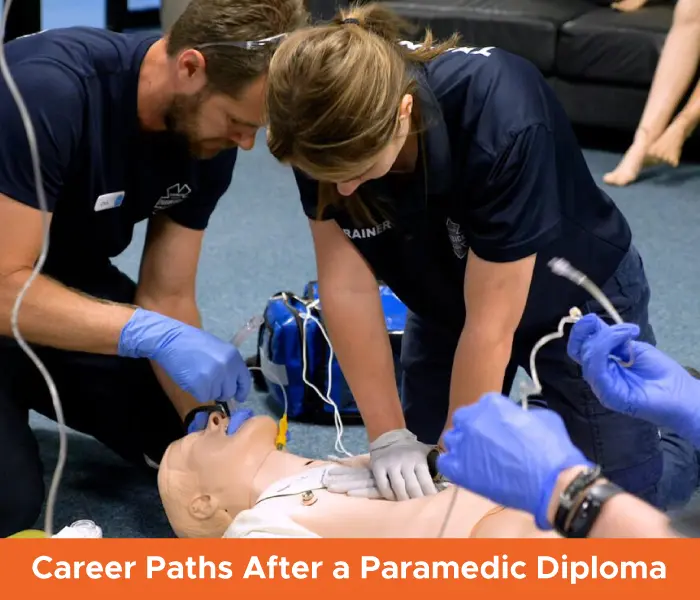
Career Paths After a Paramedic Diploma: Clinics, Ambulance Services, Research & Teaching
Introduction
Completing a paramedic or emergency medical technology diploma is an important milestone — but it’s only the beginning. For graduates of the Indian Institute of Emergency Medical Services (IIEMS), a paramedic diploma opens up a world of meaningful and diverse career opportunities. Whether you want to serve in ambulances, work in clinical settings, teach future EMS professionals, or contribute to research, your paramedic qualification can lead to a variety of fulfilling roles. In a rapidly growing emergency-care ecosystem like India’s, paramedics are increasingly central to saving lives, shaping protocols, and strengthening overall healthcare resilience.
1. Ambulance & Pre-hospital Services
One of the most obvious and high-impact career paths for paramedic diploma holders is working in ambulance services or pre-hospital care:
- Emergency Ambulance Services: Paramedics play a vital role in government-run (e.g., 108/102) or private ambulance networks. They stabilize patients at the scene, perform life-saving interventions, and monitor patients during transport to hospitals.
- Critical Care Ambulances: With additional certification or experience, paramedics can work in advanced life-support or critical-care ambulances, handling more complex cases involving cardiac arrest, respiratory failure, or severe trauma.
- Air Ambulance Services: For paramedics interested in high-adrenaline and highly specialized work, air ambulances are an option. These roles demand advanced skills, quick thinking, and the ability to work under pressure.
- Disaster Response & Mass-Casualty Incidents: IIEMS offers disaster-management training, enabling graduates to participate in emergency response teams during large-scale disasters.
Working in ambulance services allows paramedics to make a visible and immediate impact, often being among the first on the scene and making critical life-and-death decisions.
2. Clinical & Hospital-Based Roles
Paramedic diploma holders can transition into clinical settings and become essential members of hospital emergency departments and trauma units:
- Emergency Departments (EDs): Paramedics can work as EMTs or paramedic staff, assisting doctors and nurses while handling trauma cases and patient stabilization.
- Trauma Centers: In trauma-focused hospitals, paramedics’ field experience becomes invaluable for acute and long-term care.
- Outpatient Clinics & Urgent Care: Paramedics may work in high-dependency clinics or urgent-care centers, providing triage and emergency stabilization.
- Corporate Healthcare & Industrial Clinics: Many corporations maintain in-house clinics where paramedics provide first-response care.
3. Teaching & Training
With experience, paramedics can become educators shaping the next generation of EMS professionals:
- EMT / Paramedic Instructor: Paramedics with field experience are well suited to teach EMT-Basic, EMT-Advanced, and paramedic courses.
- First-Aid and Life Support Training: IIEMS is a major provider of CPR, BLS, ACLS, and disaster-response programs, creating opportunities for paramedics to become certified instructors.
- Disaster Management Training: Experienced paramedics can train others in mass-casualty management and emergency coordination.
- Curriculum Development & Simulation: Paramedics can contribute to simulation training, curriculum design, and EMS education infrastructure.
4. Research & Quality Improvement
A paramedic diploma can open doors into research and system-level improvement roles:
- Clinical Research: Paramedics can collaborate on studies involving patient outcomes, triage, and pre-hospital interventions.
- EMS System Development: Graduates can help design and improve EMS systems across regions.
- Quality Assurance & Audit: Paramedics can assess response metrics, review incidents, and recommend improvements.
- Public Health & Community Programs: Opportunities exist in first-responder training, disaster risk reduction, and community health.
5. Advanced & Specialized Roles
- Advanced Life Support (ALS) Paramedic: Further certification leads to more advanced clinical responsibilities.
- Critical Care Paramedic: These roles exist in ICU-level ambulances or air-ambulance services.
- Emergency Medical Officer (EMO): With postgraduate training, paramedics can work as EMOs in emergency departments.
- EMS Leadership & Management: Roles include EMS operations manager, station supervisor, or ambulance service director.
6. Why IIEMS Training Enhances These Career Paths
- Global Standards & Curriculum: IIEMS programs follow international EMS education standards.
- Diverse Training Programs: Additional certifications like BLS, ACLS, PHTLS, and disaster training enhance skills.
- Strong Network & Faculty: IIEMS mentors and global faculty strengthen learning.
- Real-World Experience: Clinical training offers hands-on exposure.
- Clear Growth Pathway: Diplomas and postgraduate programs support ongoing professional development.
7. Challenges & Considerations
- Resource Constraints: EMS infrastructure varies greatly across India.
- Certification & Regulation: Requirements differ regionally, necessitating continuous upskilling.
- Workload & Stress: Emergency roles can be physically and mentally demanding.
- Career Progression: Additional education may be required for faster advancement.
8. Real-Life Impact & Personal Satisfaction
- Saving Lives: Paramedics directly impact patient survival.
- Community Trust: Paramedics provide reliable and timely care.
- Mentorship: Instructors shape the future of EMS.
- Innovation: Paramedics involved in research help advance EMS practices.
Conclusion
A paramedic diploma from IIEMS is not just a qualification — it's a launching pad to a wide spectrum of meaningful careers. Whether you’re drawn to ambulance services, clinical care, teaching, or research, your background empowers you to make a life-saving impact. As India’s EMS systems grow, IIEMS-trained professionals will continue to lead — saving lives, advancing education, and shaping the future of emergency care.
 Support Email : courses@iiems.in
  Kottayam, Ernakulam, Trivandrum, Tamil Nadu